
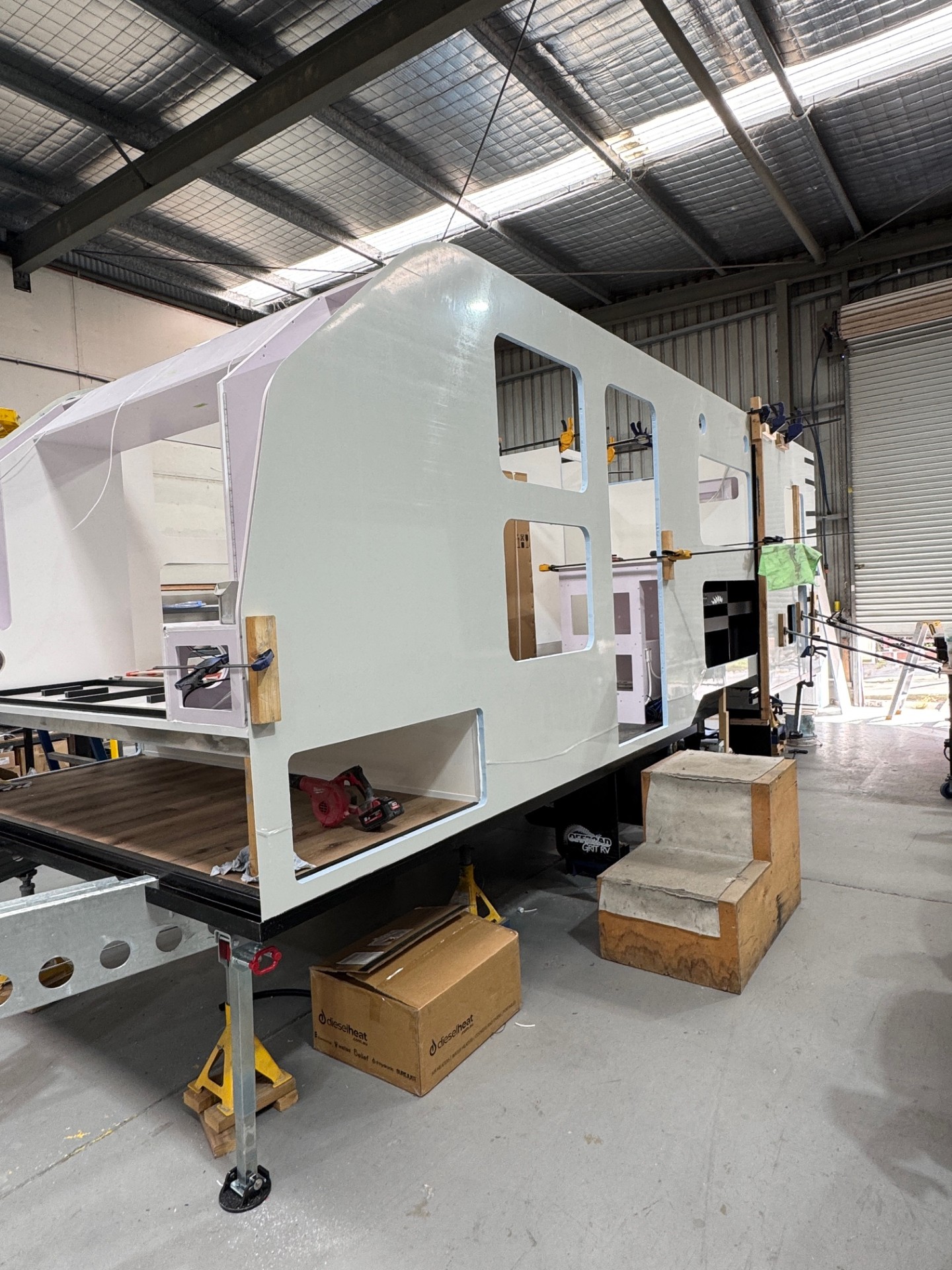
When you're investing in a high-quality off-road caravan, one of the most overlooked — yet most important — factors ishow it's built. Not just the layout or inclusions, but theactual construction materials and methods.
Two common options in modern caravan builds are:
- Aluminium Composite Panels (ACP)
- Full Composite Panel Construction
They sound similar, but they perform very differently — especially when it comes to strength, durability, insulation, andcondensation control.
Let’s break it down.
What Are Aluminium Composite Panels (ACP)?
ACP panels are made oftwo thin layers of aluminiumbonded to apolyethylene or foam core. These panels are often used in cladding and caravan wall construction due to theirlightweight propertiesandclean appearance.
✅ Lightweight✅ Cost-effective✅ Smooth, modern finish✅ Easy to cut and shape
But ACP isn’t without its drawbacks…
The Downsides of ACP in Caravans
1.Thermal Bridging & Condensation
Aluminium is ahighly conductive metal, which means ittransfers heat and cold quickly. In cold conditions, the inside of the ACP can become colder than the air inside your caravan, creatingmoisture and condensation— especially around windows and corners.
This leads to:
- Damp internal surfaces
- Mold risks
- Long-term damage to cabinetry and linings
2.Structural Weakness
ACP panels rely on external framing (often timber or Aluminium studs) for strength. The panels themselves offer minimal structural integrity, which can lead toflexing, creaking, and eventual fatigue — especially on corrugated or offroad tracks.
3.Delamination Risks
Over time, especially in hot or humid environments, the bond between the Aluminium and core can weaken — a process calleddelamination. This can cause the panel to bow, bubble, or lose rigidity.
What Is Full Composite Construction?
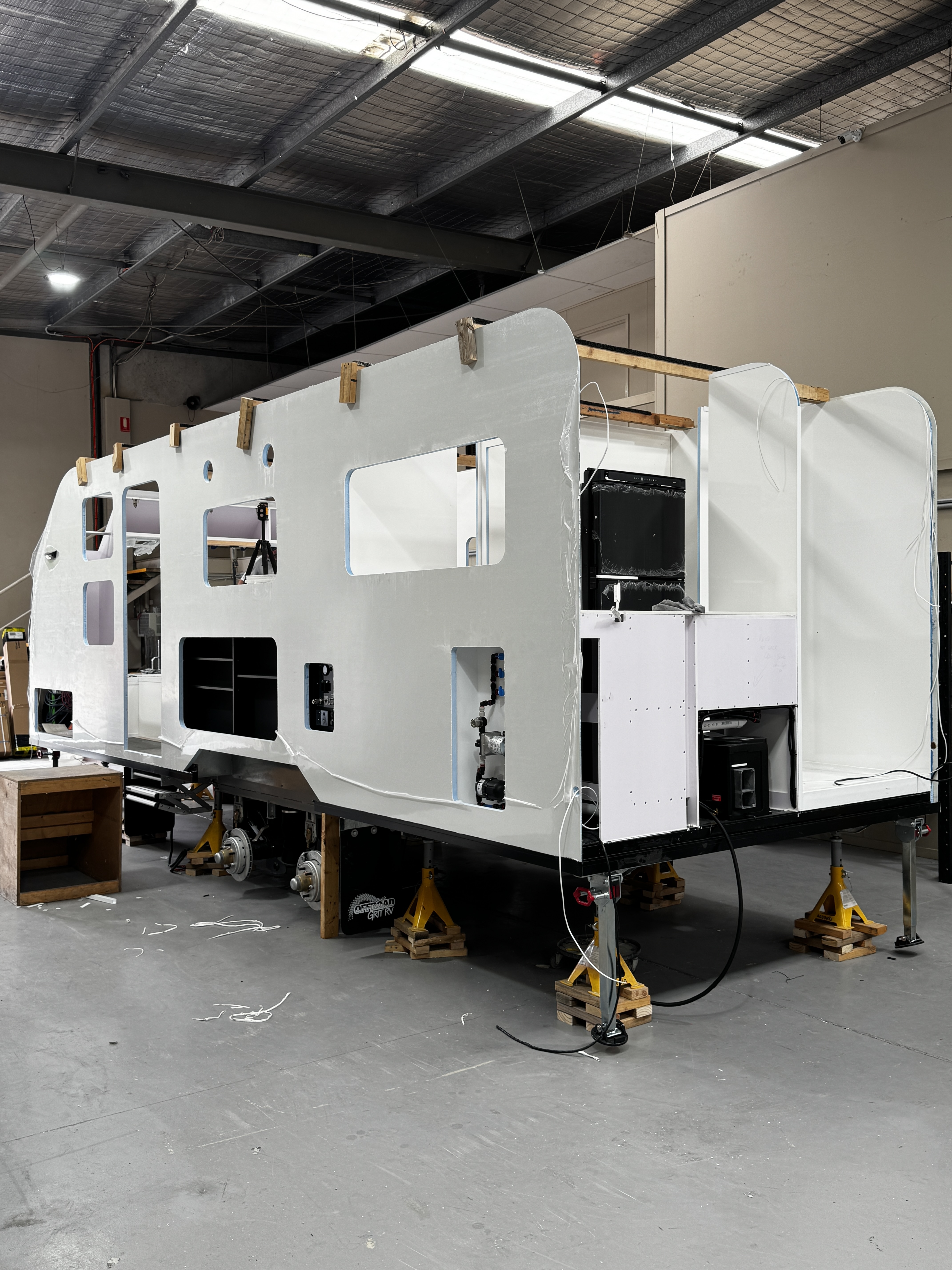
Full composite panels (like those used in Offroad Grit vans) aresingle-piece structural panels, usually made of:
- Afibreglass outer skin
- AnXPS foam or high-density core
- No timber, no external frame
These panels form thewalls, roof, and floorof the van — bonded together for strength and thermal efficiency.
✅ Strong and rigid✅ Excellent insulation✅ No timber = no rot✅ Fully sealed = less dust✅ Much better at preventing condensation
Why Composite Wins for Offroad & Off-Grid Use
Thermal performance:XPS foam cores provide consistent insulation. No cold metal surfaces inside =no sweating wallsor hidden damp.
Water resistance:No timber, no cavities, no capillary action. These panels are built forhumid, coastal, and outback climatesalike.
Durability:Bonded composite walls form a monocoque-like shell —no flex, no squeaks, and much better resistance to rough tracks or movement.
Weight efficiency:Despite their strength, composite panels are often lighter than ACP + frame systems, depending on design.
So Which Should You Choose?
If you’re buying a caravan to tow occasionally on sealed roads, ACP might be "good enough" — especially if budget is the priority.
But if you're serious about:
- Travelling off-road
- Living off-grid
- Reducing maintenance
- Keeping your van comfortable year-round
…thenfull composite construction is the way to go.
Final Thoughts
At Offroad Grit, we’ve chosentimber-free, full composite constructionfor every van we build — including fibreglass-infused flooring, XPS-core walls and roof, and durable PVC cabinetry.
Why? Because in the places our customers go, there’s no room for failure.
📩Want to learn more about how our construction sets us apart? Get in touch today